Sustainable food in schools
Food is a really good route into understanding environmental questions – and actions will often benefit health and food poverty at the same time.
What can schools do?
Local and seasonal
Reducing food waste is one of the most useful things schools can do for sustainability, and you’ll find action under the waste category of this site.
Sourcing more local food is another option – and look for organic where you can.
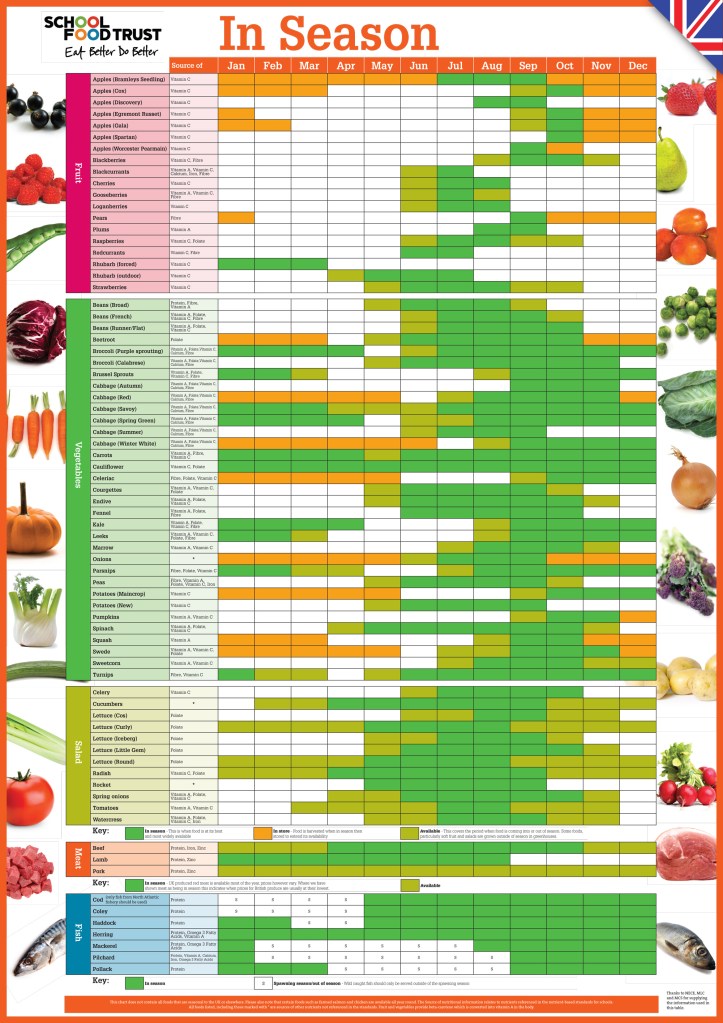
Look out for more seasonal foods – scroll down for a chart to download. Foods in season are fresher, healthier, and will have traveled less far. It also helps students to understand where food comes from and how it grows.
Growing more
Nothing brings food to life like getting your hands dirty and growing your own.
Lots of schools have gardens and growing spaces, with gardening clubs or volunteer rotas to maintain them. Some have orchards. Some even keep chickens.
See Food for Life for more on integrating this into learning. WWF or the RHS also have lots of resources.
PS – OFSTED like to see this too!
Meat and dairy
Meat and dairy are among the most damaging food for the environment. Provide good meat free options or make the veggie option the default. There’s only one school in Luton signed up to the Meat Free Monday campaign. Could you be the second?
When you do buy animal products, look for higher-welfare options, such as free-range eggs and outdoor reared meats. Children are passionate about animals and their welfare, and the RSPCA has resources for exploring this topic.
Understanding food
Helping students to understand food better will help to make the connections between land, food, wildlife and health. A farm visit can be really useful. See Countryside Classroom for more. Locally, try The Farm School near Harpenden, visit the growing spaces at Stockwood Park – or see if there’s a community garden nearby.
Buy Fairtrade where possible and use this as an opportunity to talk about global supply chains. The Fairtrade Foundation have lots of resources for schools.
Food campaigns to consider


Seasonal eating
Here’s a useful seasonality chart from the School Food Trust (no longer operating). It’s available to download if you’d like it in printable quality.
 Zero Carbon Luton