A Repair Café – coming soon to a place near you!

Julie Furnivall writes:

Do you feel angry when you read about the huge quantities of electrical goods, textiles, and “stuff” that we throw away? So do we!

A few of us from Luton Green Hub and from Luton Friends of the Earth decided to do something about the massive quantity of things that go to landfill. So, we put the word out about what we wanted to do, and we rapidly gathered around 30 people who were passionate about trying to fix things.

It’s been nearly a year in the planning, but we are now almost ready to launch Luton’s very own Repair Café. You might be wondering what a Repair Café is.  Read on ….

A repair café is a group of volunteers who meet on a regular basis (usually one Saturday a month) in a place where people can bring things that they don’t want to throw away.  The volunteers try to mend the clothing, electrical equipment, bicycles etc that the public bring in. While the volunteers are casting their expert eyes over the things that have been brought in, members of the public can share a cup of tea and a piece of cake, or similar. Our Repair Café is intended to be sociable and fun, so one of our aims is to reduce social isolation. Everything provided in a Repair Café is free of charge, but the people who come are asked to make a donation to go towards the costs of things like insurance, hall hire and refreshments.

Members of the public can also watch their possessions being repaired and can learn from the volunteer repairers how to care for their things.  For this reason, acquiring additional skills is another of our aims – and of course, the repairers will be constantly learning as they are faced with ever more challenges.

So why has it taken us almost a year to plan Luton’s Repair Café?

Well, we want to make sure we get it right!  I personally am obsessive about health and safety and the legal documentation, and I want to make sure that everything we do meets the highest standards.

To make sure we get it right, we decided to visit all the Repair Cafés in nearby towns. We had such a lovely welcome everywhere and learnt a lot from our neighbours at the Stevenage and to Hitchin Repair Cafés.

The next stage in our journey was to join the international Repair Café Federation, which is based in Amsterdam. Paying for our membership in Euros was a challenge, and receiving e-mails in Dutch was even more of a challenge. However, we now have a very detailed manual (in English!) about how to set up a repair café, and much more besides.

We then had a “dress rehearsal” when we ran a mini repair café, just looking at our own possessions. Even though it was only a rehearsal, we carried out a detailed written risk assessment of everything we did, and we used full documentation. We learnt a great deal about the need for a booking system, about managing the flow of people, and about the exact wording for our paperwork. Above all else, though, we had huge fun and developed massive enthusiasm for the future. 

What are our plans now? Well, we need to identify and firm up a location (or locations) for future repair cafes. We’re looking for an organisation (perhaps a faith organisation?) that will share our enthusiasm for developing this community resource and will help us to develop. We need a largish accessible hall (to begin with, we need it just once a month), plus storage for small tools and consumables. While we can pay for hall hire, we do – of course – want to keep costs to a minimum. Do you know of any organisations that can help?

We are also continuing to develop our database of willing volunteers. We particularly need someone with food hygiene qualifications to help with the provision of refreshments, and we need a qualified first aider. Could you be that person?

Very long term, we have loads of ideas for how we could develop. Perhaps a library of things; some skills workshops; clothing swaps; links with groups of skilled asylum seekers who are not allowed to do paid work but could volunteer. Or perhaps links with allotment holders to prevent food wastage …. The ideas just go on and on. But we need to walk before we run.

Finally, if you share our enthusiasm for preventing waste to landfill, and you want to join in, in whatever way, then please do get in touch. My name is Julie Furnivall and my phone number is 07890 004521. My e-mail is Julie.furnivall@icloud.com. Thank you! 

Luton Town’s green new stadium

Luton Town’s new stadium will include a range of sustainability features, according to detailed plans unveiled this month.

The indoor areas of the stadium will be heated and cooled using air source heat pumps “strategically located in the roof space of the North Stand.” A separate set of heat pumps will produce hot water.

Ventilation will come through a heat recovery system that will capture heat on the way out of the building, and use it to warm incoming fresh air in winter.

To power these electrical systems, the developers propose an extensive solar PV system on the roof. A proposal in the planning documents suggests there is room for 1,784 panels. This would reduce carbon and would also reduce the running costs of the stadium in the years to come.

The development is aiming for an ‘excellent’ rating on the BREEAM standards for sustainable construction. There aren’t many stadiums that meet that standard. Tottenham’s new ground does, and so does West Ham’s Olympic retrofit. Everton are aiming for an excellent rating for their new stadium.

Arsenal’s Emirates Stadium was recently named the greenest in the Premiership, in part because it has added an enormous battery bank in the basement, but its BREEAM rating is the next one down at ‘very good’. If the final build lives up to the ambitions in the planning documents, then it looks like Luton Town’s new home would be joining those clubs in the top five.

Luton Rising ads banned by ASA

The Advertising Standards Authority (ASA) has banned an advertising campaign by Luton Rising for misleading claims about its green growth plan.

The ads appeared in magazines and on posters, including billboards at Westminster tube station – the station most likely to be frequented by members of parliament. The ad copy stated that Luton Airport’s expansion would be halted if it breached environmental limits.

As we have described before, the airport’s Green Growth Plan doesn’t include the emissions from planes – by far the biggest contributor of carbon pollution. Since the ad didn’t mention this, complaints were filed by the Badvertising Campaign, Possible and others.

The ASA upheld the complaints. The purpose of the ads was “to reassure people about the efforts being taken to mitigate the environmental impacts caused by expansion,” they stated in their ruling. People seeing the ad would be “likely to assume that limits relating to emissions from an airport would include those from air traffic movement.”

Indeed they would – the purpose of an airport is to facilitate flights, after all.

While the ASA ruling applies to two specific adverts, Luton Rising has run a concerted campaign on airport expansion in recent months, including ads at Kenilworth Road and on screens at the mall.

Campaigners hope that the ruling will set a precedent for future adverts making green claims on aviation.

Reporting from the Youth Climate Conference

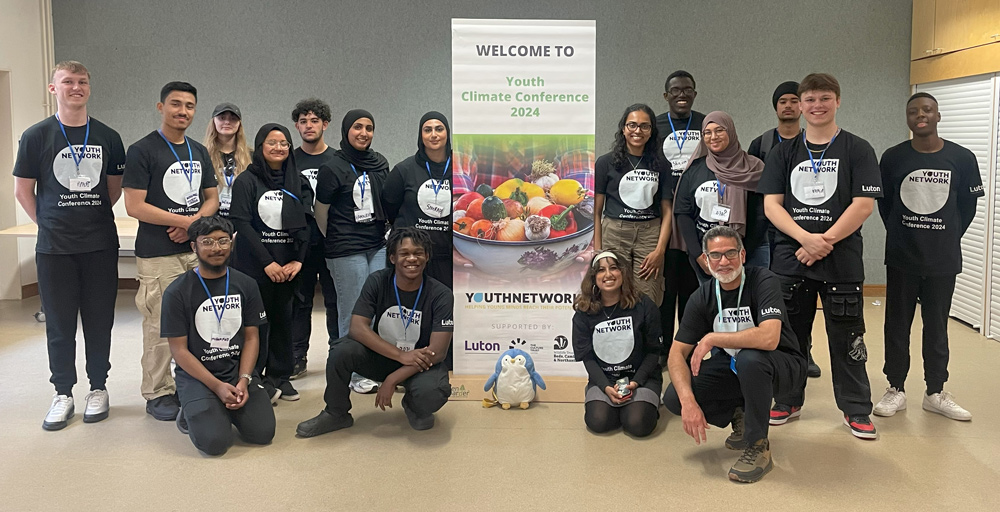
Travis Waller reports on the third Youth Climate Conference:

The Luton Youth Climate Conferences, delivered by Youth Network, started in 2022 and are a collection of workshops that help children to learn about different elements of the environment, and why the mindset people have towards the natural world should be altered. 

Youth Climate Conference 2024 marks the 3rd instalment of the annual event which is organised and delivered by the Climate Ambassadors, a group of young adults from Youth Network, who advocate on behalf of other young people. This year the conference was split into two days, with the first being attended by seven local primary schools with 65 students attending. Day two was attended by 45 students from five local secondary schools.

The vision is to inspire young people on sustainability at the point that they are transitioning into secondary school or into their GCSE years, and therefore making important choices about their lives. The focus for this year’s conference was food and biodiversity – chosen because of issues around both the environment and food poverty and the impact of food on young people.

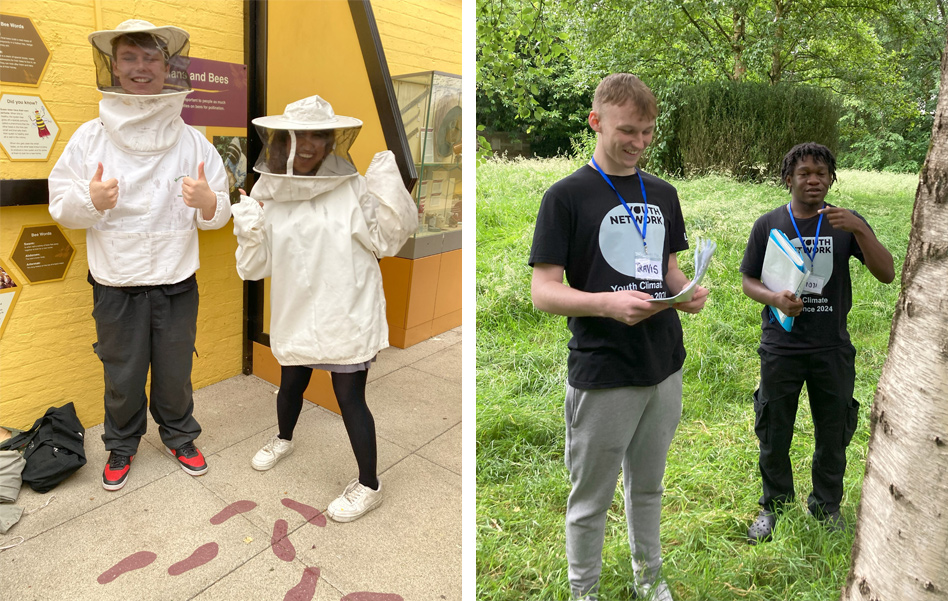
The success of YCC2024 lies in the engaging workshops, including making bug hotels or bird boxes, harvesting potatoes or growing tomatoes, putting on beekeeper suit and working with hives or identifying different trees and animals in the woodland area. To embed the learning, students wrote down their findings in their Climate Action Booklets, which form part of their plans they continue to explore the issues back at their school.

YCC 2024 was held at the Stockwood Discovery Centre, primarily for its stunning views and a multitude of sustainable areas, meaning the students can see first-hand an array of differing environmental elements. One topic that repeatedly arose during the conference was Net Zero 2040, Luton Borough Council’s pledge to reach net-zero on carbon emissions. 

Several different organisations/companies supported the climate conference including the Wildlife Trust and Luton Borough Council. This is really important as not only does it mean that the conference is acquiring support, it also means that we can use the expertise of those who constantly work within the environment to further the legitimacy and usefulness of the conference. 

All the colours of the Big Weekend

If you were there, you’ll know that orange was the defining colour of Radio 1’s Big Weekend in Luton. Yellow was still appreciated, and there wasn’t quite enough blue in that sky over Stockwood Park. This being Zero Carbon Luton however, it’s the green that we’re interested in most.

Festivals can have a big environmental impact, and the Big Weekend had a range of measures to address that.

In order to reduce plastic waste, visitors were encouraged to bring re-usable water bottles and refill points were available on site. For those buying their drinks, there was a deposit scheme operating on the plastic beer glasses. (Not everyone was interested in claiming the pocket change and lots of them were discarded on the grass. One enterprising young member of the audience collected them up and earned £25 over the course of the day.)

With a no single-use plastic policy across the site, food vendors used biodegradeable packaging and utensils. Recycling bins were also available, and dedicated bins for disposing of vapes.

The carbon content of the meals was provided too. Each vendor was asked to rate their menu items with a high, medium or low carbon rating so that people could make an informed choice.

With any big event, the largest carbon impact will come from transport, and on this particular point Luton scored very highly. Radio 1 worked with the council on a sustainable transport approach. There was no parking available on site, cutting out thousands of potential car journeys. “We strongly advise ticketholders against driving to this event and advise they make use of public transport wherever possible,” said the organisers, “for both ease and sustainability.”

Instead of cars, visitors were encouraged to take the train as their best option, and easy walking routes were marked between the station and the park. Those with accessibility needs were still able to drive to the site, and a well organised drop-off system through the Butterfield business park kept the roads clear. Cycle racks were also available for locals who chose to bike to the event.

Festival Republic, the event organiser contracted by Radio 1 to run the festival, are committed to halving the carbon footprint of their events by 50% by 2025 (from a 2014 baseline). The Big Weekend in Luton shows the kind of initiatives that will make that possible.

Reducing waste with Green Doors

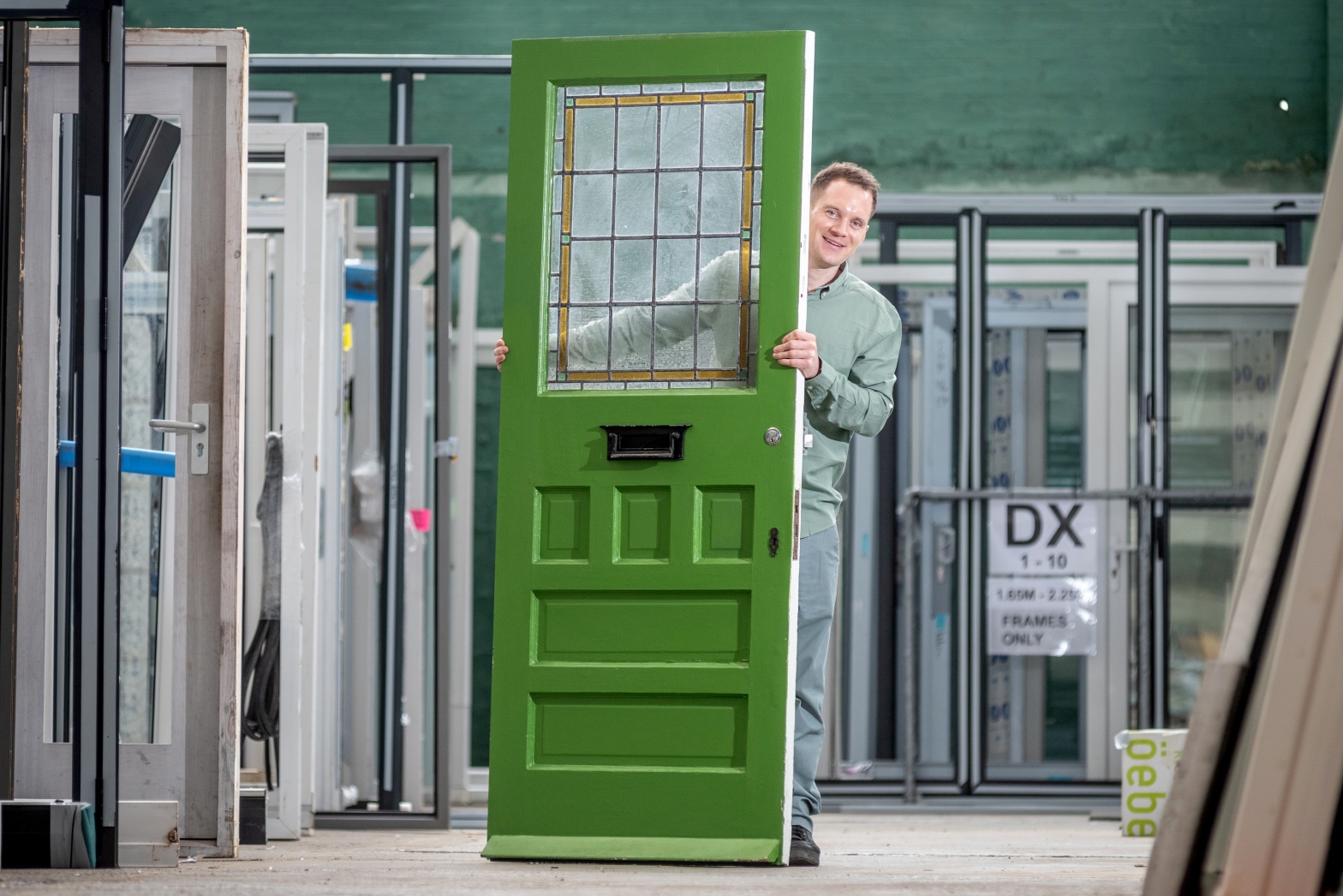
Green Doors is a Luton based company reducing waste from the construction industry. It was started ten years ago when plumber Joseph Holman found a set of french doors in a skip. Recognising the resale value of the doors, he went on to create a dedicated company that refurbishes and sells on second-life windows and doors.

Construction is a major source of waste. Often builders throw out old windows and doors when doing an extension or renovation, but with a little work those could be renovated and sold on as new. This wasteful practice is bad for the environment and bad for construction budgets too.

“There’s money to be made from reselling,” says Holman. “Many builders and other trades people are missing a trick by throwing all waste into skips while there’s a growing upcycling market. If they take more care when removing old doors and windows they could end up making hundreds of pounds on top of their work at the site.”

It’s particularly useful to upcycle PVC doors and windows, as these aren’t biodegradeable and will sit in landfill forever. Keeping them in circulation reduces the need to make more PVC, and so far Green Doors has kept over 3,000 items from going to landfill.

Based on the Britannia Estate on Leagrave Road, Green Doors have a showroom of items for sale, from lovely vintage doors with stained glass features, to modern composites, patio doors and bi-folds. You can buy online for delivery anywhere in the country, saving money on your own building project.

If you’re a business in Luton that’s working on the circular economy or on climate solutions, let us know and we’ll feature your work here too.

Park & Ride scheme for Butterfield

Plans for a Park & Ride scheme on the east side of Luton have been on the drawing board for several years, and were granted planning permission this spring. It will be located at Butterfield Business Park on the edge of Stopsley, and aims to intercept traffic coming in from the three towns of Hitchin, Stevenage and Letchworth.

The car park will have spaces for 338 cars, with the plans also detailing bus shelters, bike parking and a small site office. We were pleased to see a raft of electric car spaces – 30 in all – down one side of the car park.

Like any Park & Ride, the scheme will allow people to drive into the edge and town and then catch the bus for the final part of the journey into the centre. This keeps cars out of the busiest part of the town, reducing traffic, carbon emissions and air pollution.

One full double decker bus can take 75 cars off the road, taking up less space and speeding up journeys for everyone. And if/when those are electric buses, even better.

Green progress at Active Luton

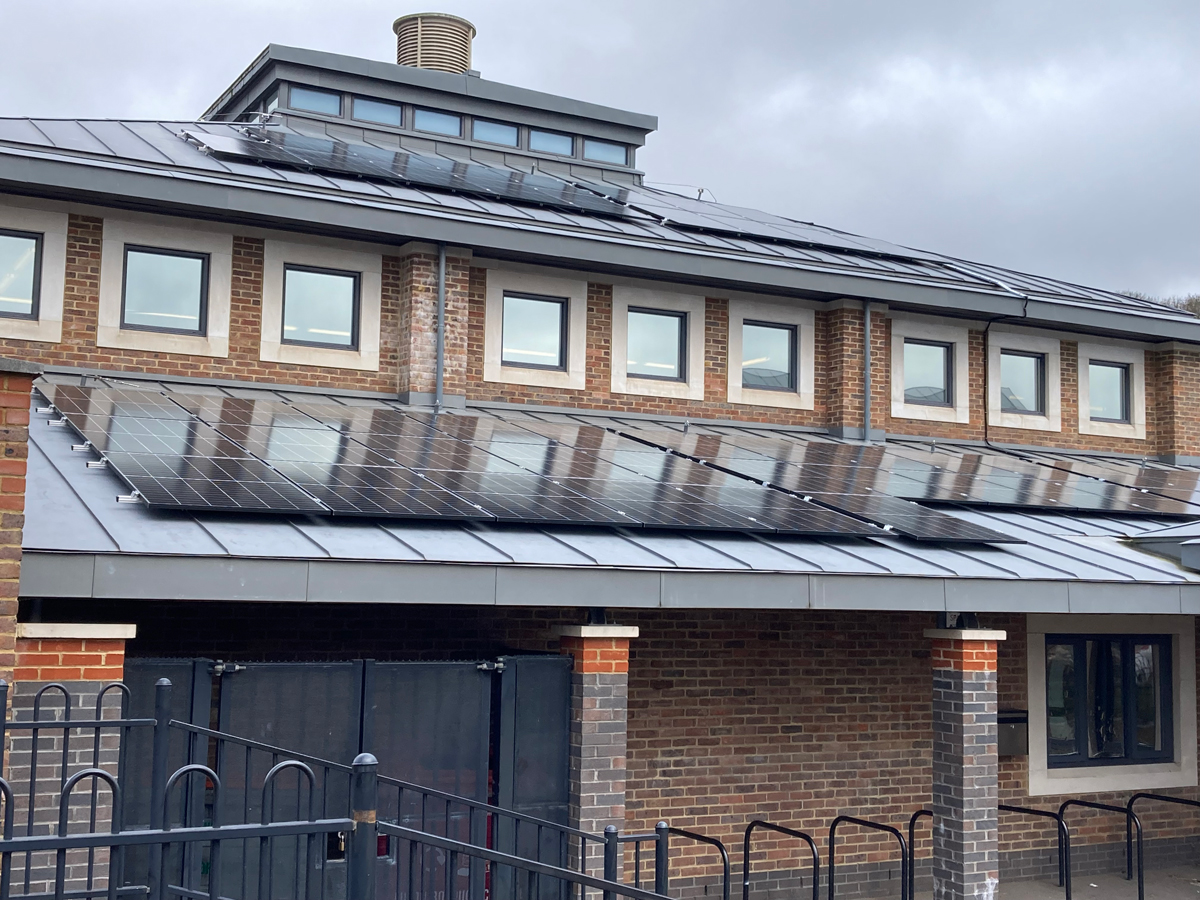
A new solar array is now generating clean energy on the roof of High Town Community Centre. The 118 panels went live in February and will deliver approximately £11,000 in savings on the centre’s energy bills in the years to come. It will also reduce the carbon footprint of the building by around 10 tonnes a year.

It’s the latest in a series of green initiatives from community wellbeing trust Active Luton, which operates sports facilities across the town, including swimming pools, gyms, and the athletic centre and golf club at Stockwood Park. Active Luton also manages the town’s libraries.

Among the trust’s projects are a switch to electric vehicles. The two maintenance vans that serve the various sites have been switched to EVs, with charging points installed to keep them topped up.

Tapping into government funding from the Public Sector Decarbonisation Scheme, the trust has also invested in combined heat and power systems at two of their sites, with others moving from gas to heat pumps.

Swimming pools are particularly energy intensive facilities, with the Inspire Sports Village in Stopsley presenting the biggest challenge. Like all Active Luton sites, there is a decarbonisation plan for Inspire. It includes small changes such as low-flow showerheads, through to bigger projects like the plan for solar panels on the roof. The centre has already been connected to a energy monitoring system, providing data on energy use to inform future efficiency measures.

Behind the scenes, a green champions group meets regularly to share progress across the sites and set priorities. Sustainability is a priority for the trust, as it joins the rest of Luton in the goal to be net zero by 2040.

Where are Luton’s EV charge points?

If you’re considering an electric car, then one of the most important things you’ll want to consider is where it will charge.

Most people charge at home – that’s where 80% of EV charging happens, and it’s usually the cheapest option. Some people with their own charge points make them available to others through app-based sharing services such as JustCharge or Zap-home. If you don’t have a driveway or a charger of your own, see if anyone in your neighbourhood is set up for sharing.

Then there are public chargers of varying speeds. Where would you find one in Luton?

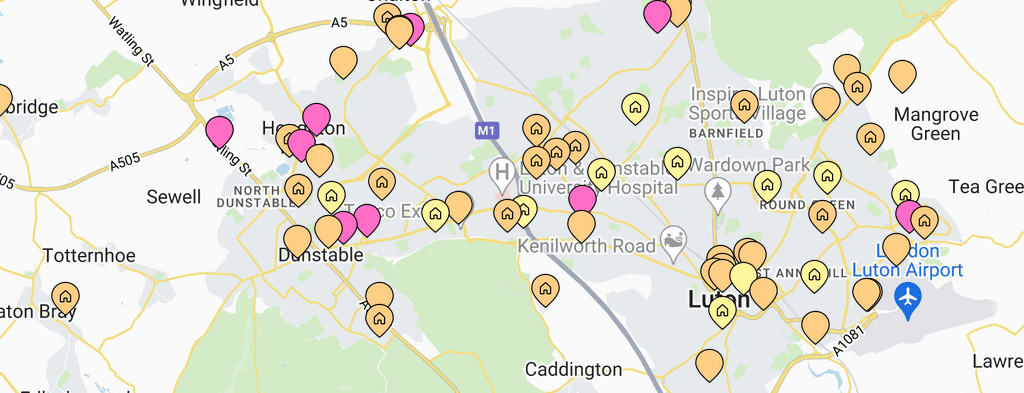
Lots of places. Those looking for a rapid charger can choose from Sainsbury’s in Bramingham, the retail parks in Wigmore or Dunstable Road, or Venue 360, among others. A growing number of visitor destinations host charge points, such as Inspire, Stockwood Park, Luton Hoo, etc. For a top-up while out and about, there are charge points in several locations in the town centre and a growing number of shops, including the Aldi branches on Hatters Way or Gypsy Lane.

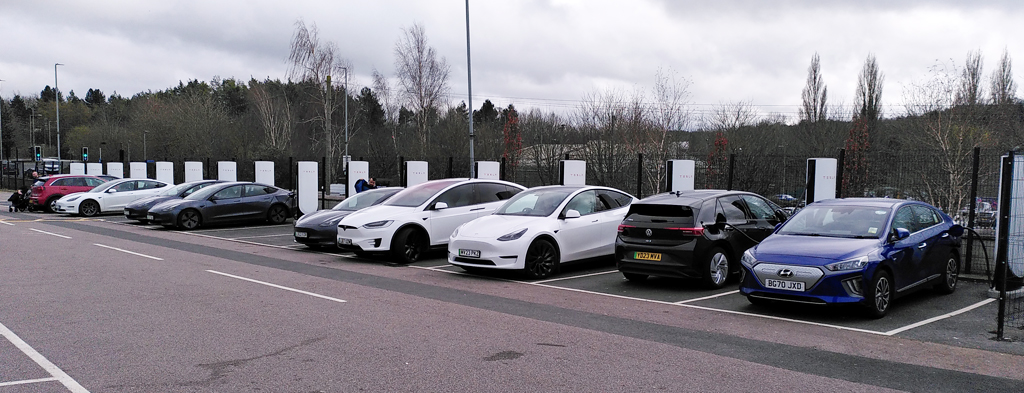
Across the street, Gypsy Lane Retail Park hosts a bank of 16 recently installed Tesla superchargers. And as you can see from the photo below, you don’t have to own a Tesla to use them.

Any such list is rapidly obsolete, because more charge points are added all the time. Older and less efficient ones are occasionally removed. So the best place to go – and most EV drivers will know this already – is Zap-Map.

They map charge points across the UK, with notes on charging speed and connecting cables, and even live updates showing if they’re available or not.

New community garden for peace and wellbeing

Father Luke Larner, priest in charge of Saint Andrews, Biscot, shares the vision for the new community garden and wellbeing hub they are creating at the church.

Three years ago I was sent off to Bedford as an apprentice, or curate, as we call it in the church. I learned a lot, but we really missed Luton while we were away. Then I heard about this opportunity Biscot, and I came to look around before the interview. The church wardens happened to be working outside at the time. I saw how a few members of the congregation had built a peace garden round the back of the church during lockdown, using old pews to make raised beds. They told me how they wanted to use the outdoor spaces around the church to connect with the local community, including the doctor’s surgery next door.

Seeing how they were creating beauty in a densely populated and concreted-over area of Luton really captured my imagination. So when I took the post we started looking at what we could do with our outside space. As far as I know it’s the only community green space in this part of Luton.

What I inherited was this beautiful but very small peace garden at the back of church, two big lawns, and a conveniently ideal location for growing fruit trees, vegetables and flowers. Getting practical, we’ve set up what we’re calling a ‘peace and well-being hub’. We are hoping to transform the way that people relate to their environment in this part of town. We’re having outdoor exercise, yoga and mindfulness classes, and doing community gardening sessions.

Many people in our communities talk about the incredible gardening skills that their parents and grandparents or their uncles and aunties had, but those skills haven’t always been passed on to the second and third generations living here in Luton. That breaks the connection with traditions of growing and sharing food together that is important in Kashmiri or Bengali culture. I love hearing about these traditions from our neighbours that we’re working with, and creating a space for that growing and sharing to happen. It benefits health and biodiversity, and it enhances our relationship with each other, with the earth and with our culture and heritage. It’s the fullest possible definition of peace and wellbeing.

This year on Saint Brigid’s Day, which is the traditional first day of spring, we planted our community orchard of local apple and pear species. About 30 people from right across the community came and it was so joyous just digging holes and getting muddy together.

We’re doing something incredibly simple, but Luton is a spiritual town. The number of people with no religion is very low compared to the national average, and so you don’t need me to tell you that there is a deeper and more meaningful dimension to what we’re doing. We recognised this as we planted our trees, using a mixture of sacred texts from different traditions. There’s a wonderful hadith attributed to Prophet Muhammad (peace be upon him) which says even if eternity was to be bestowed on you tomorrow, if you’ve got a sapling in your hand, you should plant it. That is a captivating idea and a beautiful saying.

Going away to Bedford and coming back has helped me fall back in love with this town. It’s not all romantic. It can be a hard place. But there is something so special here, and I think we have the start of something truly hopeful.


Want to get involved? Our first community gardening session is at 2pm on Saturday 16th of March, and our Spring Festival and Seedling Swap is on the 20th April. See the website for details.