The Mall harvests its first honey

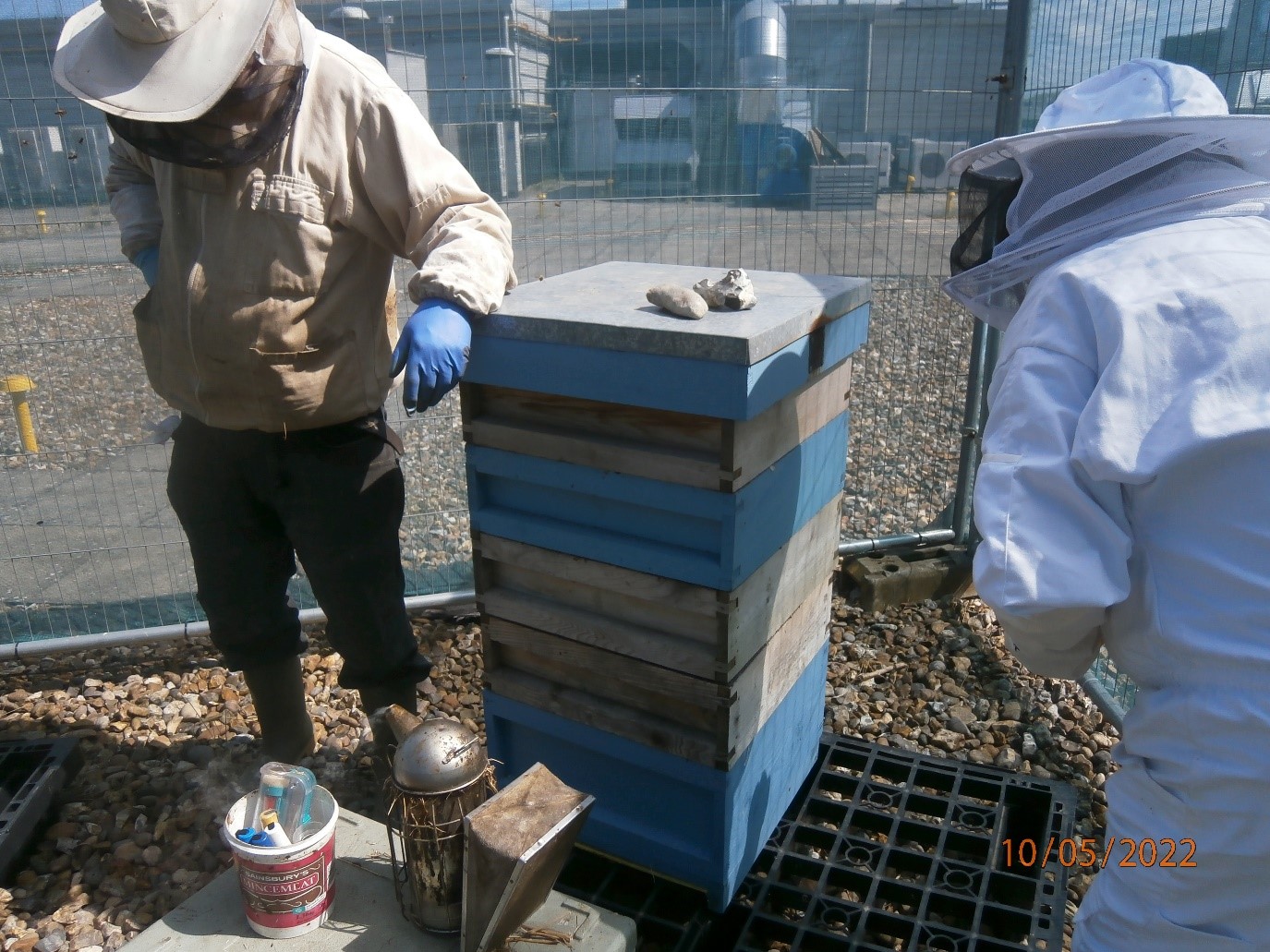
In 2021 The Mall installed a beehive on the roof, swiftly followed by a second one and a pollinator garden. In September this year they extracted their first honey harvest and sold it to shoppers, raising £680 for Luton Foodbank.

Two members of staff have volunteered as trainee beekeepers, who removed 30 frames from the bee hives and processed them in the kitchen. 75lbs of honey was collected and packed in jars for resale. Having sold most of the harvest to shoppers, the team kept some back for Bedfordshire Beekeepers Centenary Honey Show.

“We were so excited for the installation of our rooftop hive back in 2021,” says Tracey Bateman, Business Manager and one of The Mall’s trainee beekeepers. “It’s been so rewarding finally reaping the rewards of our (and the bees!) hard work. We are so grateful that shoppers were as excited as we were to buy jars of our delicious honey. All proceeds will go such a long way for Luton Foodbank, a charity very close to our hearts. Hopefully we will have many more jars to come in future seasons!”

The bee hives on the roof are part of the Mall’s environmental pledge, which includes recycling, and reducing water and energy use.

At Zero Carbon Luton we are interested in good use of rooftops – whether that is for rooftop gardens, solar, rainwater harvesting, or other uses. If you know of any other rooftop projects we should know about, tell us about it in the comments.


A roadmap to a zero carbon town

A zero carbon Luton will take all of us – citizens, council, businesses, organisations, schools and more. But what do we need to do? How are we going to do it?

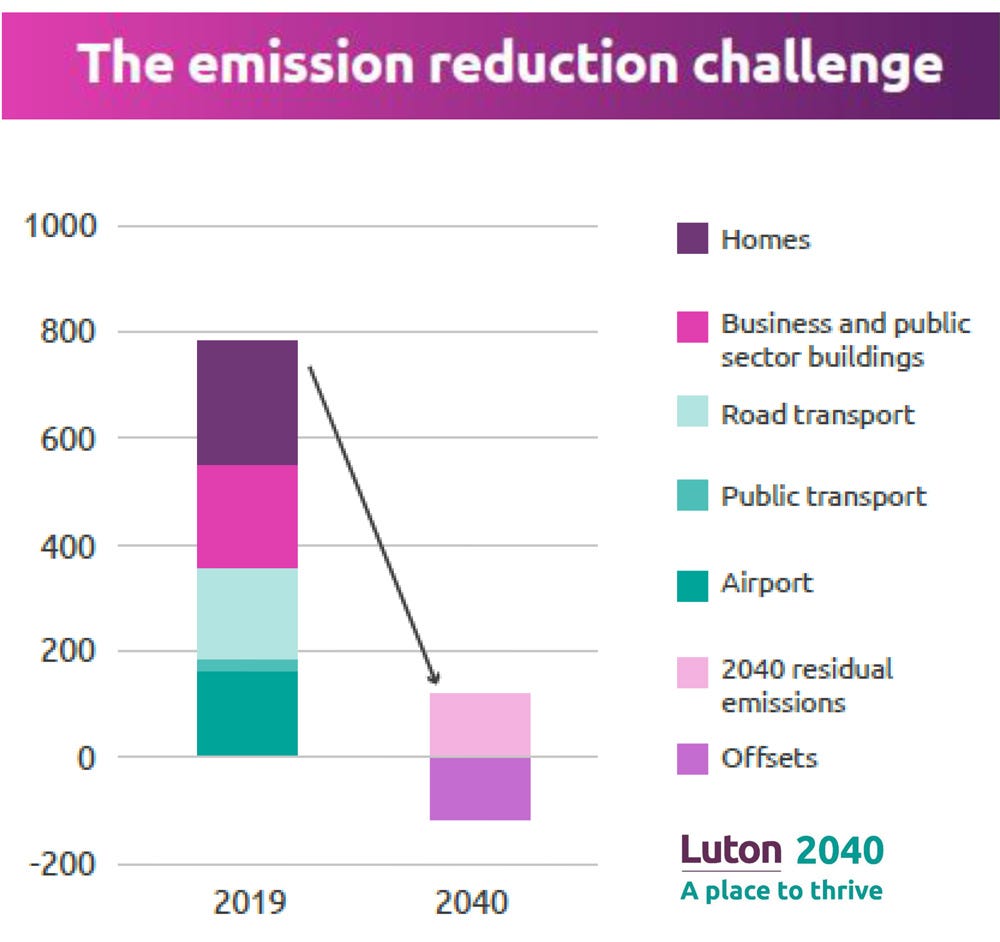
Luton Council have revealed the first details of a new ‘roadmap’ for how Luton will get to net zero carbon by 2040. Having set the target and outlined its ambitions in the previous climate plan, this draft document begins to describe how this will be achieved.

From a baseline of 2019’s emissions, the challenge is to reduce CO2 across all sectors over the next 18 years:

The roadmap, to be published in full later in the year, describes a three stage process towards zero carbon. In the early years of this decade we can expect a focus on strategy and awareness raising, then moving on to pilot projects that begin to demonstrate where the town is going. Highly visible projects such as the town centre redevelopment and zero carbon council buildings will lead the way.

By the late 2020s we’ll begin to see projects scaling up. There will be extensive investment in infrastructure for electric transport. Lots of jobs will be created in the new green economy. Larger projects will include whole-street retrofits and the first local heat networks.

The 2030s will see more widespread implementation, with Luton’s homes retrofitted to net zero standards. Electric transport, renewable energy and renewable heat will all become normal.

As emissions fall, so will air pollution. Health outcomes and quality of life will improve. Energy costs will be reduced, as Luton’s climate change plan works in tandem with its goal to end poverty in the town. We look forward to sharing more details on the plan in the coming months.

Since we’re all involved in creating a zero carbon Luton, it’s important to get the roadmap right. So you’ll have the opportunity to comment on the draft in a forthcoming consultation – look out for more details of that soon. In the meantime, why not view the plan and see what you think?

Read the draft net zero roadmap

Where to save energy: heating

We’ve looked at appliances and cooking recently, as two areas where we might be able to save money during a time of high energy costs – and reduce our carbon footprints at the same time. In this article, we’ll take a look at heating.

In many ways this is the most important place to look for savings, because heating is the biggest energy user in the house.

From a climate change point of view, it’s also most likely to be high carbon. Electricity can be from renewable energy, but heating is gas for most of us. So heating is a big one.

Any energy saving measures that target heat will make a difference. The simplest of those are the ones that don’t require any expensive interventions – that’s why people are always advising us to turn down the thermostat. But did you know that most combi boilers run at the wrong temperature? Turning down the ‘flow temperature’ of the boiler (which is different from the thermostat) could save 6-8% on your bills. Here’s how you do that.

Here’s a good principle to remember when reducing heating bills: warm the person, not the space. It’s how we used to do things in the old days, which is why we designed high-backed chairs and four-posters beds. Both keep the heat around the person, rather than attempting to heat the entire room. Central heating has made us forget a bunch of things we used to know. The first time you think of putting the heating on this autumn, ask instead how you could warm yourself – a jumper, a hot water bottle, one of those microwave wheat bags?

The same goes for spaces. If you’re working from home during the day this winter, try heating the space that you’re in, rather than putting the heating on and warming the whole house. Fit thermostatic radiator valves and turn the heat down in spare rooms.

Look again at the graph, and you’ll see that hot water is the second biggest user. Taking shorter showers, or running the dishwasher less often, will both put a dent in that. The Energy Saving Trust reckons shorters showers can save £70 a year, which seems well worth it.

Homes lose heat all the time, so it’s important to keep as much of it as we can. That’s why insulation is so important.

Here’s an image of how homes lose heat, so you know where to focus. Hopefully you’ve done the loft already, but you can put down another layer of insulation. The recommended depth has gone up, so if you insulated your loft years ago you might want to top it up.

You could keep your home warmer with some thermal curtain lining if you haven’t done that yet. Blinds or shutters might be an alternative, and you’ll get the benefit of those during heatwaves too. You might want to hang curtains across doors as well.

There are of course bigger jobs, such as wall or underfloor insulation. They will pay for themselves over the long term as you save energy every year.

There’s more we could look at, but to summarise – if you’re looking to reduce energy costs, focus on heat first. Insulate. And heat the people.

Where to save energy: cooking

Reducing our energy use is good for the climate, and it’s also good for household budgets – a double win of lower bills and lower carbon. We recently looked at the appliances that use the most energy around the home. Let’s zoom in on something specific this time: cooking.

How we cook makes a big difference to energy use. Not everyone knows that, and a recent survey found that 52% of people don’t know which forms of cooking use more energy – and therefore cost more. According to the research, which was carried out by Iceland and Utilita, households could save as much as £600 a year just by cooking the same foods in more efficient ways.

So what are the cheapest ways to cook? Here’s the order from most to least expensive:

ApplianceDayWeekMonthYear
Electric cooker87p£6.09£26.38£316.54
Dual cooker72p£5.08£22£264.03
Gas cooker33p£2.32£10.07£120.83
Slow cooker16p£1.15£4.98£59.76
Air fryer14p£1.01£4.40£52.74
Microwave8p58p£2.50£30.02

Obviously not every recipe can be switched to a different appliance, but many things can and the savings will add up. It’s not uncommon for packaging to list three or four different ways to cook something. Custard in the microwave or on the hob? Fish fingers in the oven or in a pan? Jacket potatoes in the oven or in a slow cooker?

There are significant differences here. Look at the difference between the cheapest and the most expensive. Cooking in the microwave instead of the oven is a 90% saving.

With the information about the savings to hand, perhaps we can all make better choices and save ourselves some money this winter.

Where to save energy: appliances

As price rises drive people to look for ways to save energy, it pays to know which appliances use the most power. If you know what’s most expensive to run, you know what to switch off! This chart from Bloomberg is a neat visual summary of how much it costs to use various appliances, in a typical day:

As you can clearly see, heating is the killer. If you want to reduce those costs, you can do the obvious things like turning down the thermostat and putting a jumper on – but you do that anyway, right? The big difference will come from adding insulation so that your house stays warmer for longer, making better use of the energy that you use in heating. Loft insulation and cavity-wall insulation are the big ones. Draught-proofing is quick and cheap. And adding thermal curtain linings on windows can make a difference too.

There are also a handful of other potential savings in that list. If you can cook less with the hob or the oven, and more with the microwave, that will definitely add up. You could boil the kettle and wash up the old fashioned way, and let the £1 saving motivate you. Hanging the laundry on the line is even better, and I spy a great excuse not to do any ironing.

The most frequently heard advice on energy saving is to switch off lights when you leave a room – which is great, but is only going to save pennies.

We’re all going to have to think about our energy use carefully in the coming months. And every little saving that we make will reduce carbon emissions too.

Luton residents fundraise for Pakistan

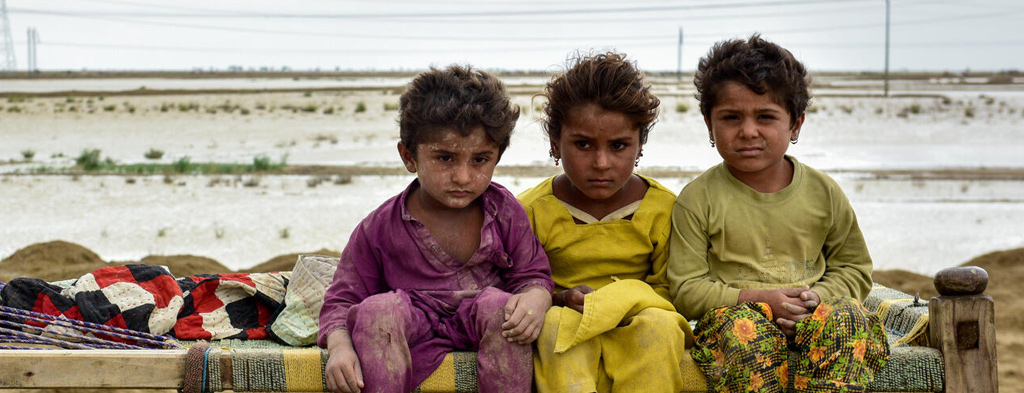
Luton residents are rallying in support of communities in Pakistan after the country was hit by historic flooding. Mosques, local businesses, organisations and individuals have been working together, hosting events including a sponsored car wash and a charity dinner. The funds will go towards relief efforts in Pakistan, where 33 million people have been affected by flooding. Many have lost homes, crops and livestock in the heaviest monsoon season for a decade.

Among those playing a key role in coordinating the fundraising efforts is local radio station Inspire FM. “What we’re telling people is that we will market whatever they are doing,” says Operations Manager Mohammed Tariq. “If there are people out there who can do a run, a sponsored walk, whatever you can do to raise money – then we as a radio station are happy to promote that, and to support them in their venture. And if there are people who want to raise money but don’t know of a credible charity, then we can help there too and bring people together.” Inspire FM’s website will be listing details of local fundraising events and projects.

It has been a difficult year for Pakistan, and for Luton families with a connection to the country. Earlier this year Pakistan was hit with a heatwave unparalleled in 122 years of temperature records. Scientists have since suggested that climate change made the heatwave 30 times more likely. Now Pakistan has been hit again, this time by devastating floods, driven by higher rates of glacial meltwater combining with very heavy monsoon rains.

“When you have disasters like this, it brings home the impact of ignoring the environment,” says Tariq. “It’s very important at times like this to not only help and support, but also to look at the causes of why it’s happening, and see the bigger picture.”

Make a donation

Image credit: Children displaced by floods in the Balochistan province of Pakistan ©UNICEF/Pakistan22/Sami Malik

Reporting on the Youth Climate Conference

The closing video from the Youth Climate Conference 2022. And yes, people are already talking about a date for the 2023 conference, so watch this space.

We were delighted to be able to partner with Youth Network, along with the council, Culture Trust, Luton Rising and and University of Bedfordshire to help out with this peer-led conference.

For more, check out the report from Climate Ambassador Shana Ryan in the July issue of the Zero Carbon Newsletter. (You subscribe, right?)

Cycling made E-asy pilot project

Luton has been selected as one of five pilot locations for a new electric bike scheme. Cycling Made E-asy is a government funded scheme run by the Cycling UK agency. It provides free loans of electric bikes, offering people an opportunity to try out a variety of different types – including cargo bikes, folding bikes, and e-bikes adapted for different abilities.

It’s a perfect opportunity not just to take an e-bike for a spin, but to take out a longer loan and trial it properly on a commute or a school run. Or in the case of businesses, perhaps to trial e-cargo bike deliveries and see how it works out.

The project will be based out of an ‘e-hub’, where riders will be able to pick up pre-booked e-bikes, and where they will also receive training in riding the bike.

As well as Luton, the scheme will also be running in Manchester, Sheffield, Hull and Leicester, with a view to a wider roll-out. The Manchester pilot is up and running now, with bikes in high demand. Cycling UK told us that they are “yet to set a launch date for Luton & Dunstable”, but we will report back with more details when they are available. You can already register your interest here.

 XR’s Carnival for Life to visit Luton

Extinction Rebellion are touring a ‘Carnival for Life’ around the East of England, and will be bringing their “big, bold, colourful and beautiful” celebration to Luton on Friday the 22nd of July.

The carnival will start at Manor Road Park at 3pm and proceed towards George Street and the town hall, where there will be a samba band, animal costumes, ‘die-ins’, dancing and more until around 7pm. All are welcome.

“We want to celebrate all that we hold dear in life, the art, the music, the fun,” says XR East of England. “We also need to give the message of the suffering happening already around the world, giving a platform for their voices.”

The carnival in Luton is one of six planned in July, with others taking place in Norwich, Bury St Edmunds, Hertford, Colchester and Ipswich, in advance of wider Extinction Rebellion actions due to take place in September. More details on Facebook.

The Youth Climate Conference

Zero Carbon Luton is delighted to be working with Youth Network on the Youth Climate Conference, which will take place on the 11th and 12th of July 2022 at Stockwood Park.

Organised by and for young people, this youth-led conference be an opportunity to learn, to question, to help to shape a better future. Day one will be for participants from 11 to 18, and content tailored to secondary school audiences. Day two is aimed at those over 18, and includes more focus on skills and employability, ensuring that young people are equipped to play a part in the new green economy.

Here’s a video trailer for the conference, with further details from Youth Network here.

In partnership with the Culture Trust, we’re delighted to have Stockwood Park and Discovery Centre hosting us for the duration. Sessions will take place inside and outside, in the gardens, exhibition spaces and buildings, with lots of time to explore the site. Lunch will be provided.

How to get involved:

  • We’re recruiting a team of young people who will be presenting workshops and facilitating the conference. If you’d like to be part of the team, email info@youthnetwork.org for more details.
  • We’d love to welcome more schools groups alongside those already attending. Teachers and heads, please get in touch with Youth Network to discuss your needs.

A big thank you to Luton Council, the Culture Trust, Luton Rising, University of Bedfordshire and everyone else who has been working with Youth Network to organise this event for young people in the area.